Bike Tire Clearance Explained
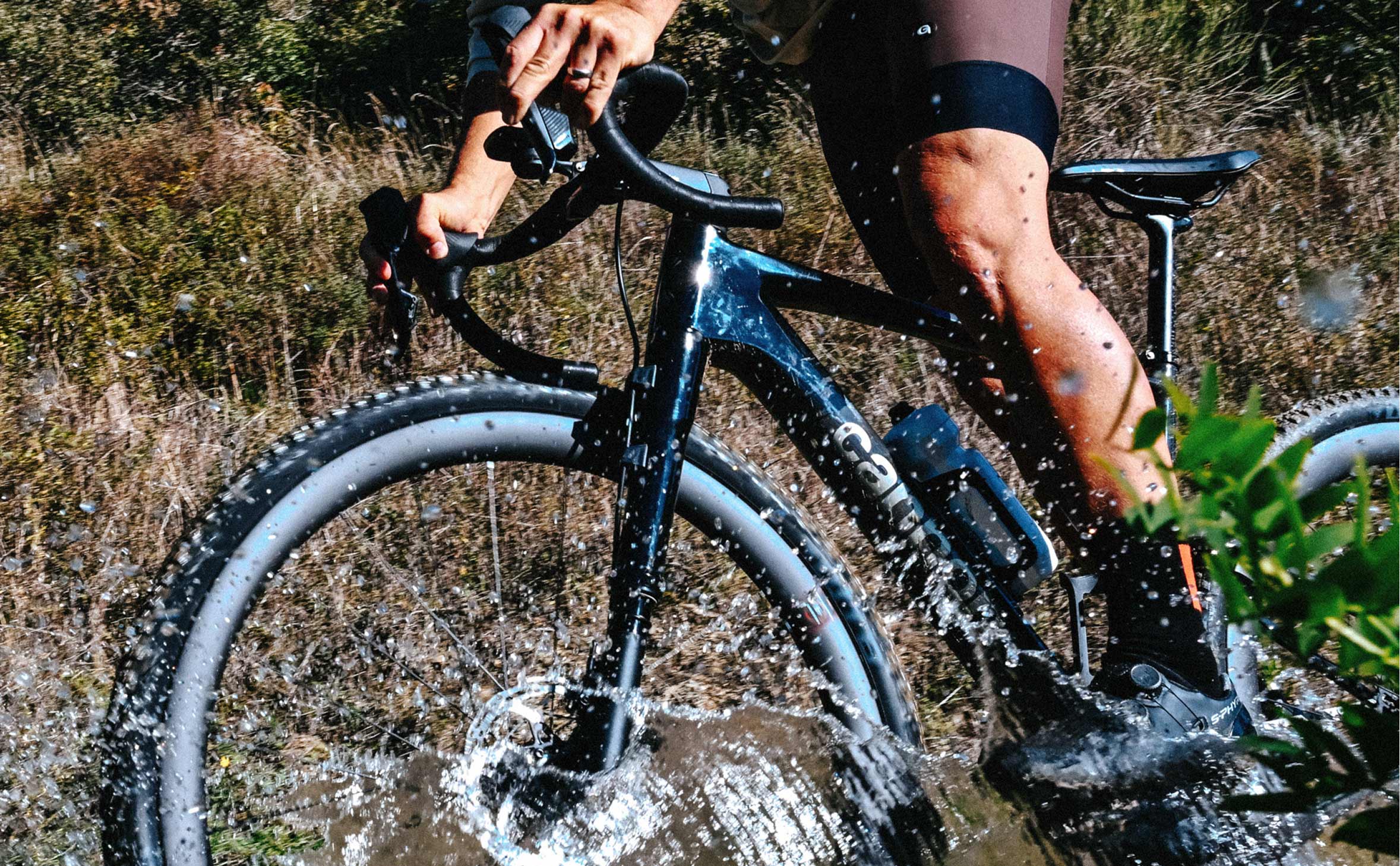
How wide you can go, why tire width matters and what it means for you and your ride.
There’s a moment. Somewhere between the hum of the paved road and the satisfying crunch of gravel. When the excitement kicks in and you realize that your ride is getting a little more adventurous. That you’re exploring off the regular, expected route.
It’s also the moment when you begin to realize that your bike set up is (or isn’t) humming too. Whether it’s working in harmony with you or, actually, against you. It’s moments like this when the route you’re choosing, the terrain you’re riding, and the bike set up choices you’ve made, have all come from one original question you asked yourself: how much tire can my bike actually fit?
Tire clearance has become one of the hottest topics in cycling circles in recent years. Not too long ago, road cyclists were riding 22mm tires on their bikes as standard. Back then, a wide road tire of 28mm was considered huge. But times change. And soon, with the advent of disc brakes and the ability to run wider rubber, 32mm almost begins to feel normal.
As cyclists started getting adventurous, and venturing off-road became more appealing, riders began experimenting more. To the point where they now casually debate the merits of everything from 38mm right up to 50+ and beyond on their gravel bikes.
It’s not a trend. It’s a shift in how we all think about comfort, performance, and where a modern bike can really take us. And that’s actually pretty exciting!


What is bike tire clearance?
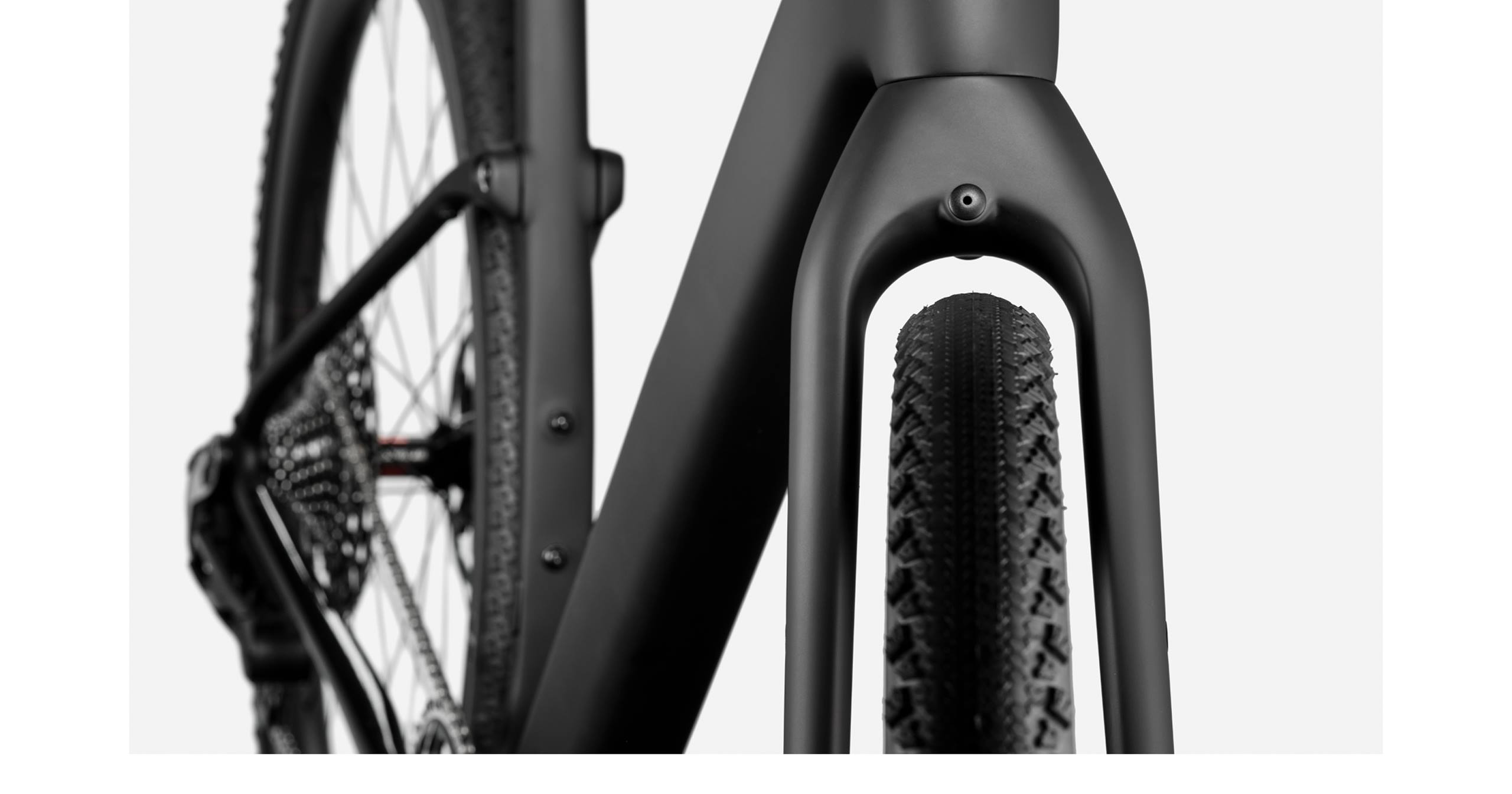
As the term suggests, bike tire clearance is about space. The space between the tire you’re running and the bike frame and fork.
And it’s that space that dictates your options. A frame that maxes out at 38mm is capable of a very different kind of riding to one that can comfortably accommodate 50mm or more of chunky rubber with room to spare.
One bike leans more towards speed and responsiveness on paved roads and firmer terrain. While the other invites confidence to explore more and to take the rougher route or trail to see where it goes.
Once mounted, optimal tire clearance generally allows for 4-5mm (the industry minimum is 4mm clearance) either side of the tire to allow for your wheels to flex and for debris and dirt to clear off them without damaging your frame. Tires that are mounted too close to the frame can soon start rubbing against it. And that’s not something you or your frame want to happen. Friction and debris against the frame can act like constant rubbing from sandpaper, and – in the case of carbon frames – end up damaging it badly.
Why does tire clearance matter?
Well, put simply, the more clearance you have, the wider tires you can run. This means more volume in the tires themselves, and the ability to run them at lower pressures.
Lower pressure can mean a number of benefits. Better traction. Better vibration absorption. And increased comfort on the bike. Meaning less fatigue for you on longer riders and quicker recovery afterwards.
As mentioned, clearance on either side of your tires is essential to ensure that mud and debris sticking to your tires doesn’t come into contact with – and potentially damage – your frame. Or create friction and slow you down. This is particularly important for gravel bikes and MTBs where you spend more time playing in muddy conditions.
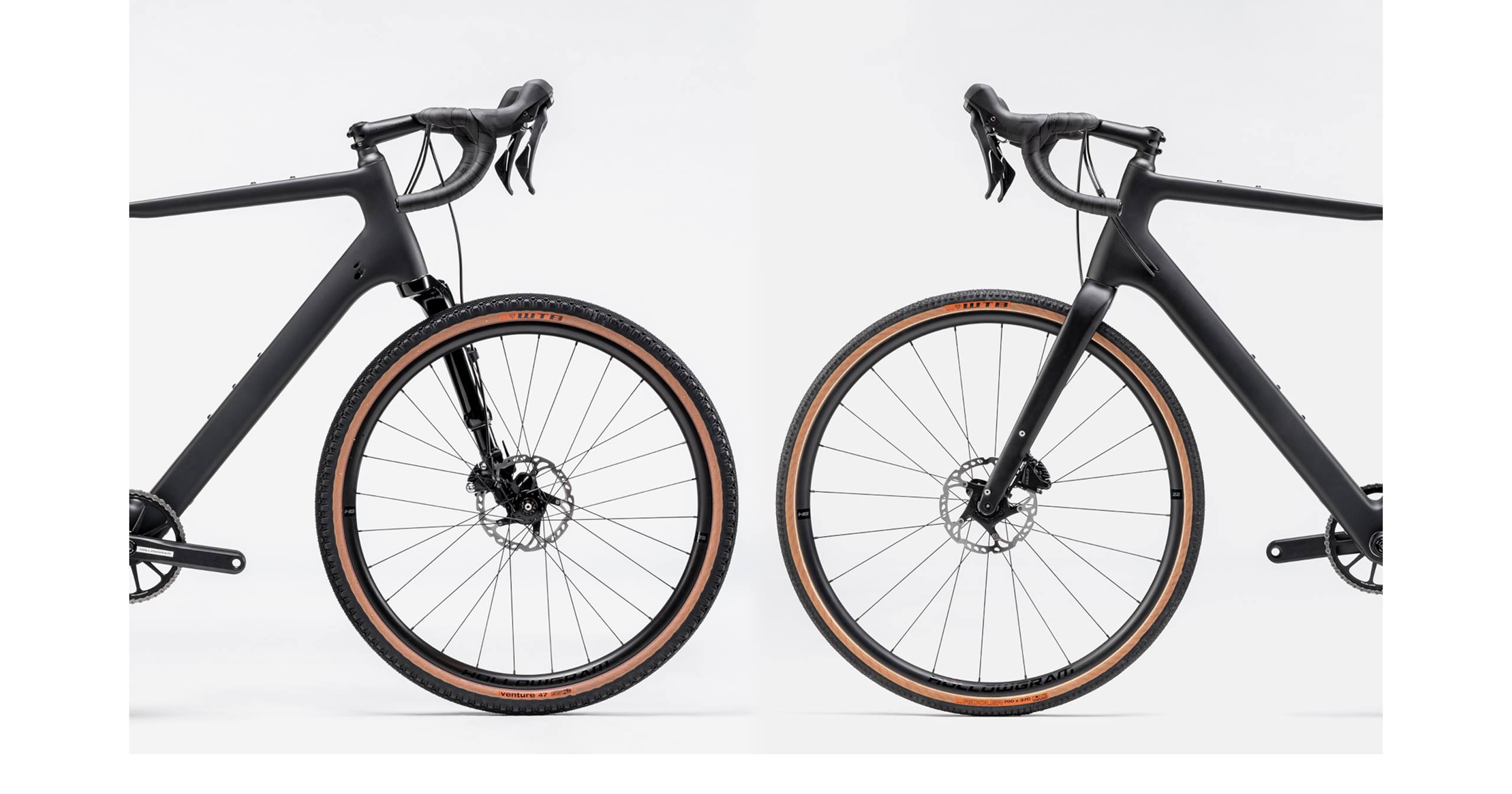
Are wider tires really better?
Generally speaking, yes. In fact, the more tests that are carried out in relation to tire width, the more the consensus is that, thanks to better rolling resistance, wider tires are better on most fronts. Although skinnier tires might feel fast when being run at higher pressures, they’re actually slower than wider tires at lower pressures. (Of course, narrower is better for aerodynamics in most cases still. But on gravel for example, the fatter the better!)
Wider tires create a rounder, shorter contact patch with the ground that deforms less as it rolls around. Meaning it reduces energy loss caused by friction on the ground. This is what’s meant by rolling resistance. The more you can reduce rolling resistance, the faster and easier you can roll!
A wider tire also has increased grip and traction, particularly when cornering. This gives you, the rider, increased confidence when rolling into corners which, in turn, also increases speed incrementally too. The more confident and relaxed you are, the quicker you can go.
Another benefit of bigger tires and more air volume is that the chances of punctures and “pinch flats” reduce dramatically, as the tire happily gives and deforms around stones and other obstacles that it encounters.
The one caveat here however, is that wider, bigger tires do add a bit of weight to your bike set up. And the wider you go, the less aerodynamic they become. So, in a handful of instances, these penalties can mean that a narrower, more aero tire can sometimes be faster on smoother surfaces. Although less comfortable for sure!
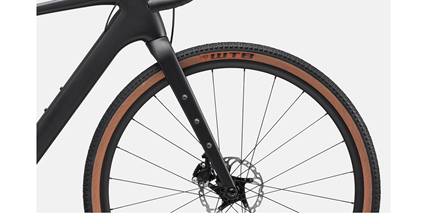
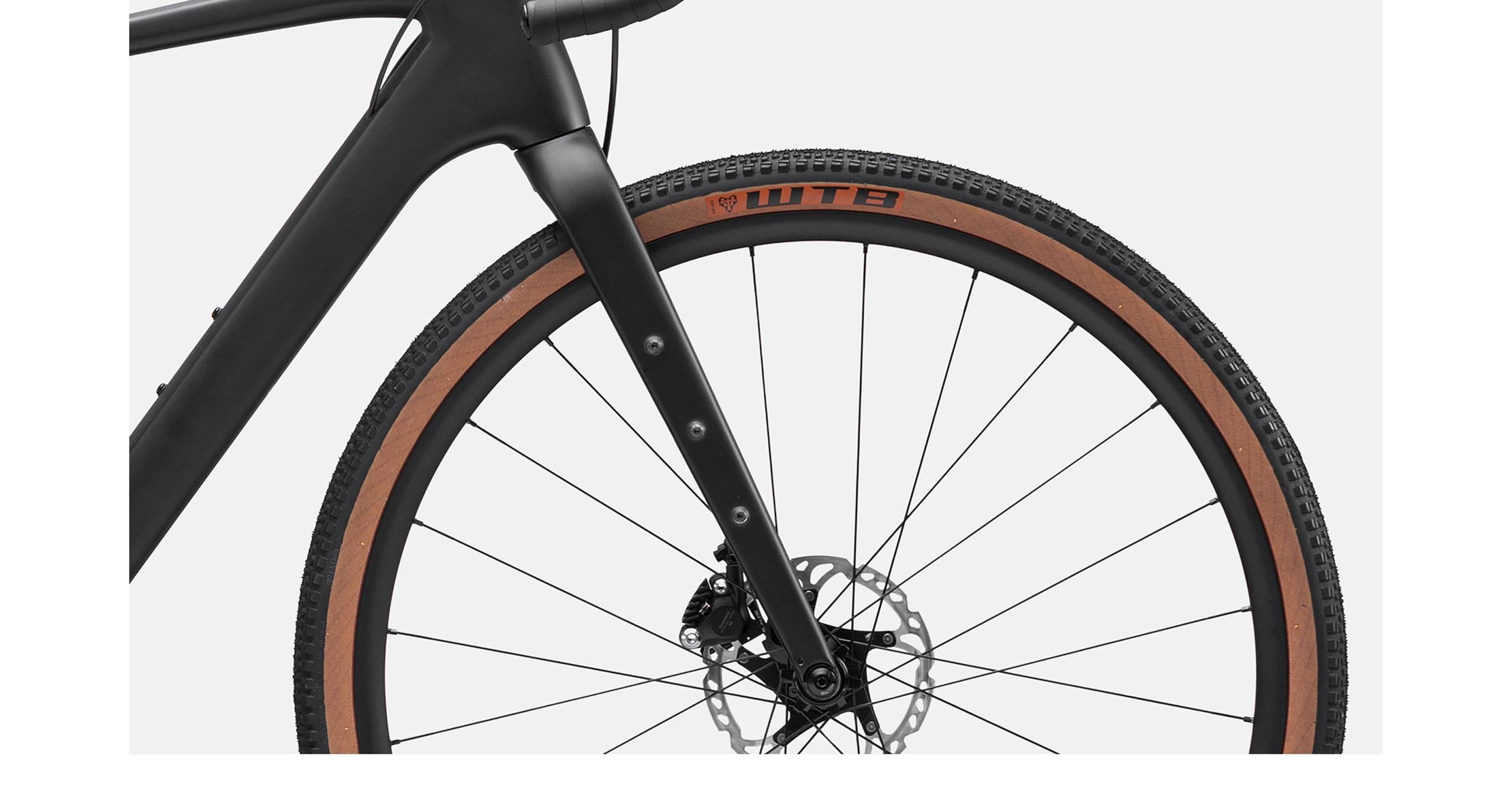
How much tire clearance do I need?
This depends on the kind of riding you’re planning on doing. If 100% of your days in the saddle are going to be on smooth rolling paved roads, the chances are you’re looking for a bike that’s more performance-focused and built for speed.
Without the necessity to be running big rubber, or the need to clear crud and debris, your bike clearance is bound to be smaller than setting up a bike for an off-road adventure through ten different kinds of mud and whatever else might come your way. Without adequate clearance on either side of your tires in this instance, you could soon find yourself with wheels that can’t go around anymore due to the peanut butter stuck between them and the frame. Check out photos from Unbound 2023 to see what we mean!
One handy tip to consider is the Allen key test. Taking a 4-6mm hex key from your toolbox or bag, you can try sliding it between frame and tires at the tightest points between them. You want to check spots such as the top of the fork, chainstays and seat stays. If a 5mm hex key slides in between OK, you’re golden. 4 mm is really the minimum you want for road and gravel bikes. Less than that and you can consider yourself a gambler and risk-taker.
It’s worth knowing that at Cannondale, we always list tire clearance on our bikes with measured tire width plus the industry standard of 4mm of space on each side. Because depending on wheel rim width, the same tire can expand to differing sizes, making things that little bit more confusing!


"Run what you brung"
Sure, experimenting with different tire widths, treads and pressures is an endless adventure and tons of fun to really nerd out over.
But while pros and the press often obsess over marginal gains when it comes to speed and aerodynamics, for most cyclists, the simple benefit of comfort will always outweigh the time it takes to micro-adjust pressures and widths.
In other words, if it feels good, ride it. If you feel too much buzz on the road or shaking and chatter on the trails, try letting a bit of air out. Wheels feeling heavy and slow? Put a little air in to see what difference that makes. The Goldilocks sweet spot is generally what feels comfy for you.
When all’s said and done, modern bikes are generally pretty adaptable machines. So whatever tire fits on your bike will pretty much always get the job done. Don’t overthink it or stress about it – just get out there and ride.
Because riding bikes and having fun is why we’re all here, right?
For easy reference: the SuperSix EVO and CAAD14 have a tire clearance of 32 mm. The Synapse Carbon offers 48 mm of clearance at the front and 42 mm at the frame. The SuperX accommodates 51 mm tires up front and 48 mm at the rear. The Topstone Carbon fits up to 56 mm tires at the front with a rigid fork, 47 mm with a Lefty, and 42 mm at the frame. The Topstone Alloy provides 42 mm of clearance both front and rear.


