Meet the Aluminati: Caadastrophe
Photography from Albert Gallego
Where it begins.
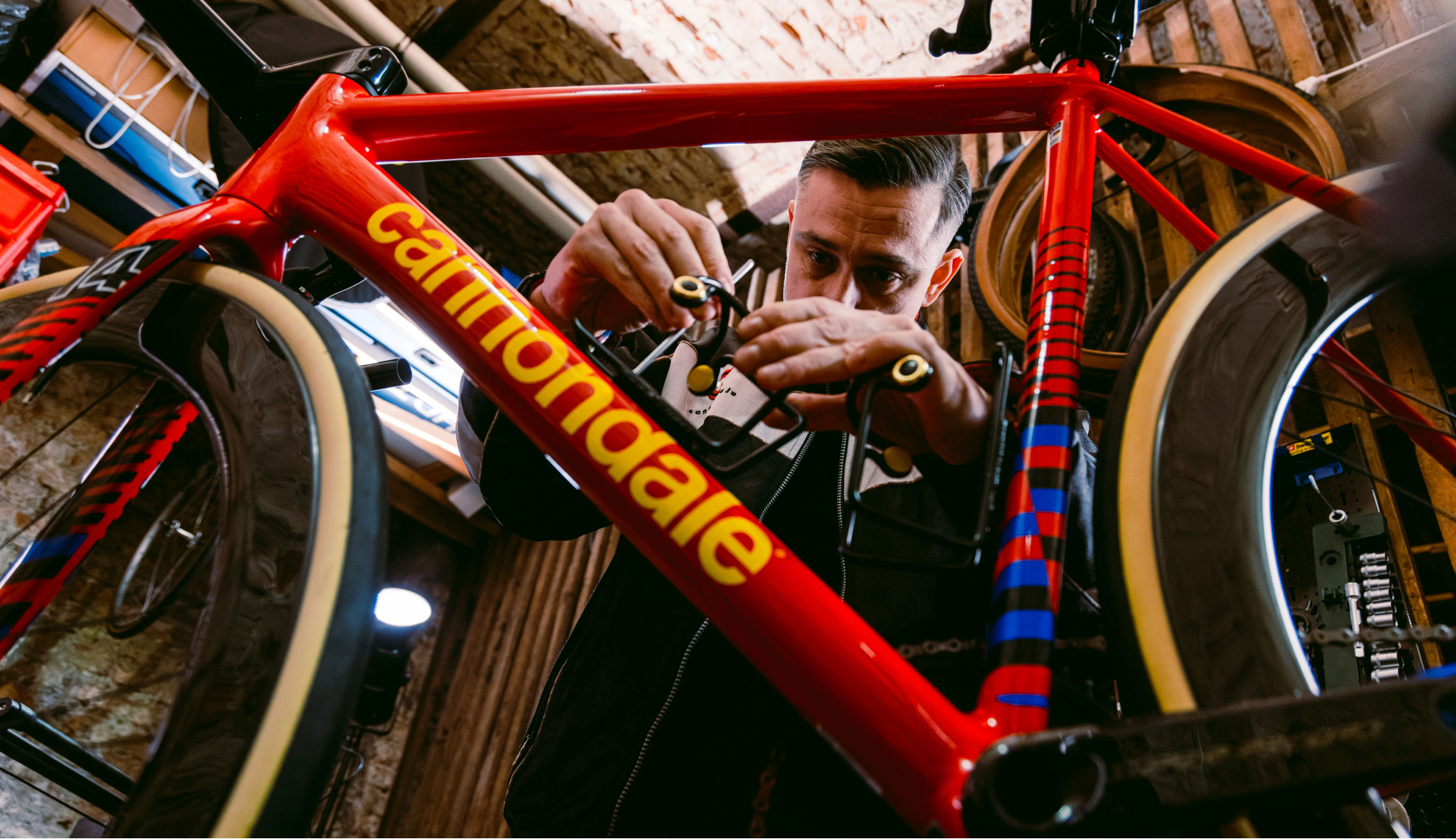
In a quiet basement in Munich, far from polished showrooms and product launches, Marcel is building bikes. The space is simple. Tools within reach. Parts carefully laid out. Each piece in its place.
By profession, he’s a lawyer in the demanding world of M&A. Long hours. High pressure. Decisions arriving one after another. Cycling came into his life as a way to clear his head and recover some measure of stillness.
At first, it was riding.
Then the machine itself began to draw him in.
He started paying closer attention to the things beneath the ride. How a bike worked. How it carried speed. How one small change could alter the whole feel of it. What began as an outlet took on greater weight. Greater intimacy. Greater consequence.
Building bikes became his way of reading cycling from the inside.
Meet the Aluminati: CAADASTROPHE
Not Carbon
Marcel’s connection to bikes runs further back than he first understood. As a kid, riding through his village with friends, bikes were part of the day’s fabric. Many of them rode Cannondales. Mountain bikes with a certain line to them. A certain bearing.
Years later, when road cycling entered his routine, that feeling returned.
Alloy.
At first, it was practical. High-end bikes were expensive. Marcel saw an opening there. He started searching for older frames. Twenty-year-old aluminium bikes with clean lines and balanced proportions.
He stripped them down and rebuilt them.
What he found altered his view.
Performance was not reserved for the top shelf. It could be assembled with care. For around 800 euros, he was building bikes that felt fast, responsive, and fully his own. More than that, they spoke clearly through the road and through the frame. Aluminium kept very little hidden. It returned the ride in full.
That became the footing for everything that followed.
The build is everything
For Marcel, a bike never starts with a parts list. It starts with a concept.
An idea of how the bike should feel. Visually and on the road.
From there, the process takes time. Often a great deal of it. Finding the right parts can take months, sometimes years. The right part completes the whole. It settles the line. It brings the shape to rest.
Proportions matter at every point. The relationship between frame and components has to feel natural. A deep wheelset only works if the frame can carry it. An aero cockpit has to match the stance. Every decision leaves its mark on the whole bike.
When it works, you see it at once.
For a long time, this was something Marcel did for himself. Quietly. Without much need to share it.
Then he realized he wasn’t the only one looking for bikes this way.
A shared language
The CAADASTROPHE page started as a simple way to document his builds. It quickly became something larger.
People from all over the world began reaching out. Riders with no spotlight, no noise, and remarkable bikes. From the UK to Indonesia to Japan, Marcel found a global community. Different backgrounds. Different influences. The same eye.
A shared appreciation for bikes with presence, proportion, and clarity.
That’s when the idea of the “Cult of CAAD” began to take shape.
A shared understanding.
At the center of it all is aluminium. Direct. Raw. Precise in the way it answers the road. It rewards care. It reflects the hand of the builder.
In a cycling world always pressing toward the next thing, that quality still holds.
A masterpiece
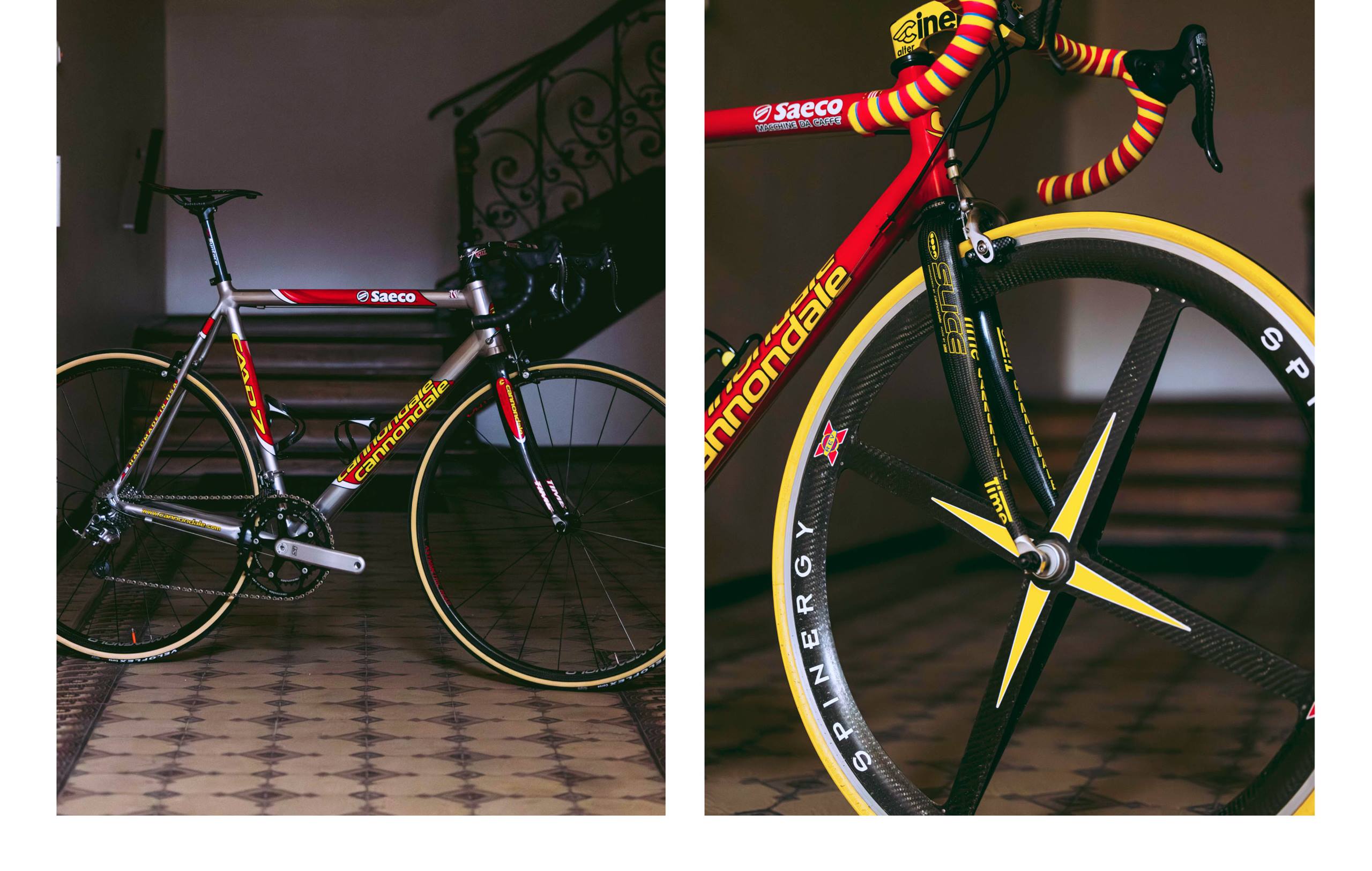
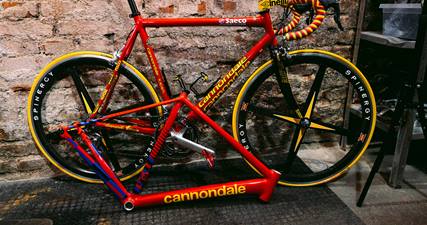
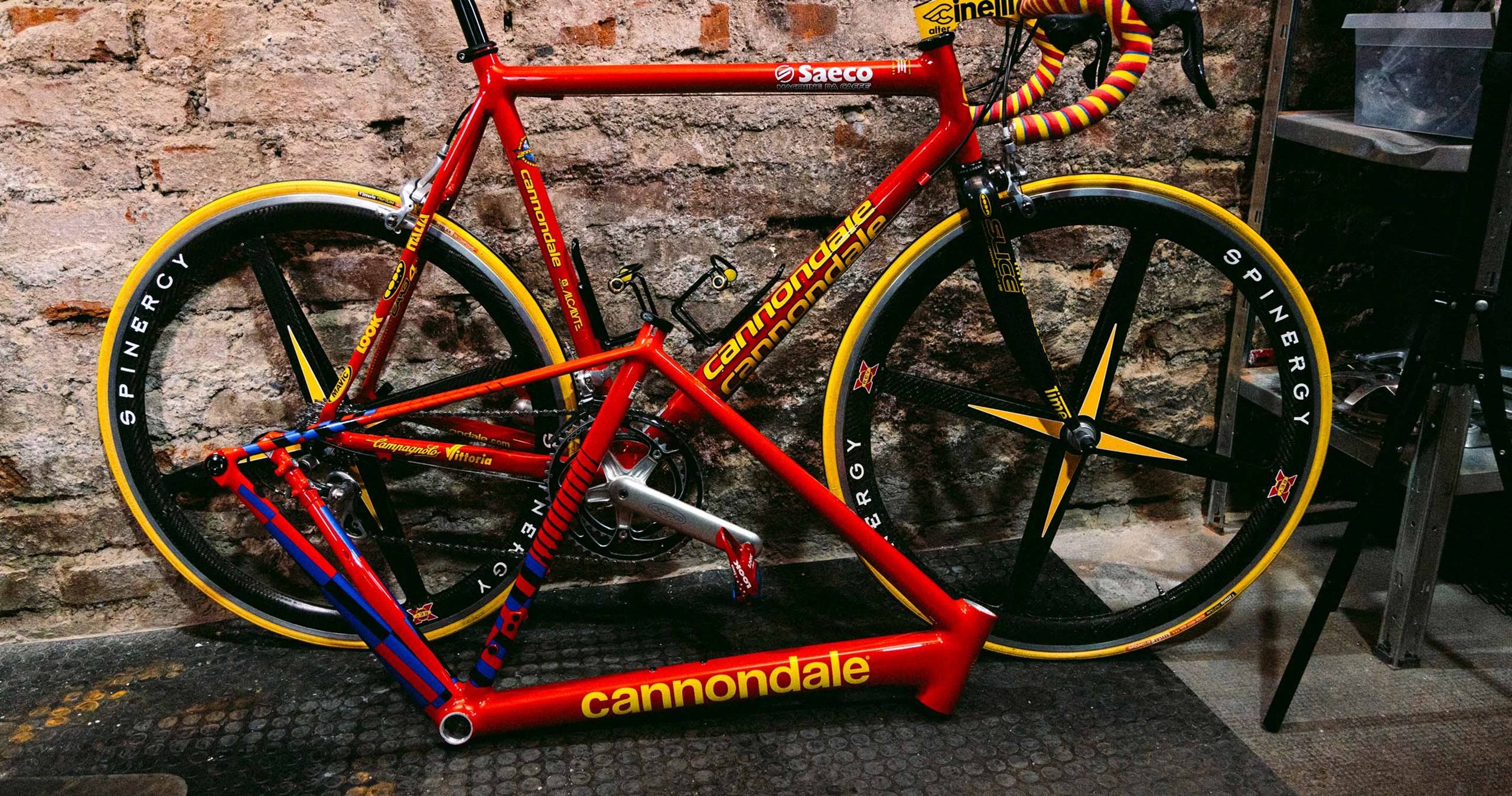
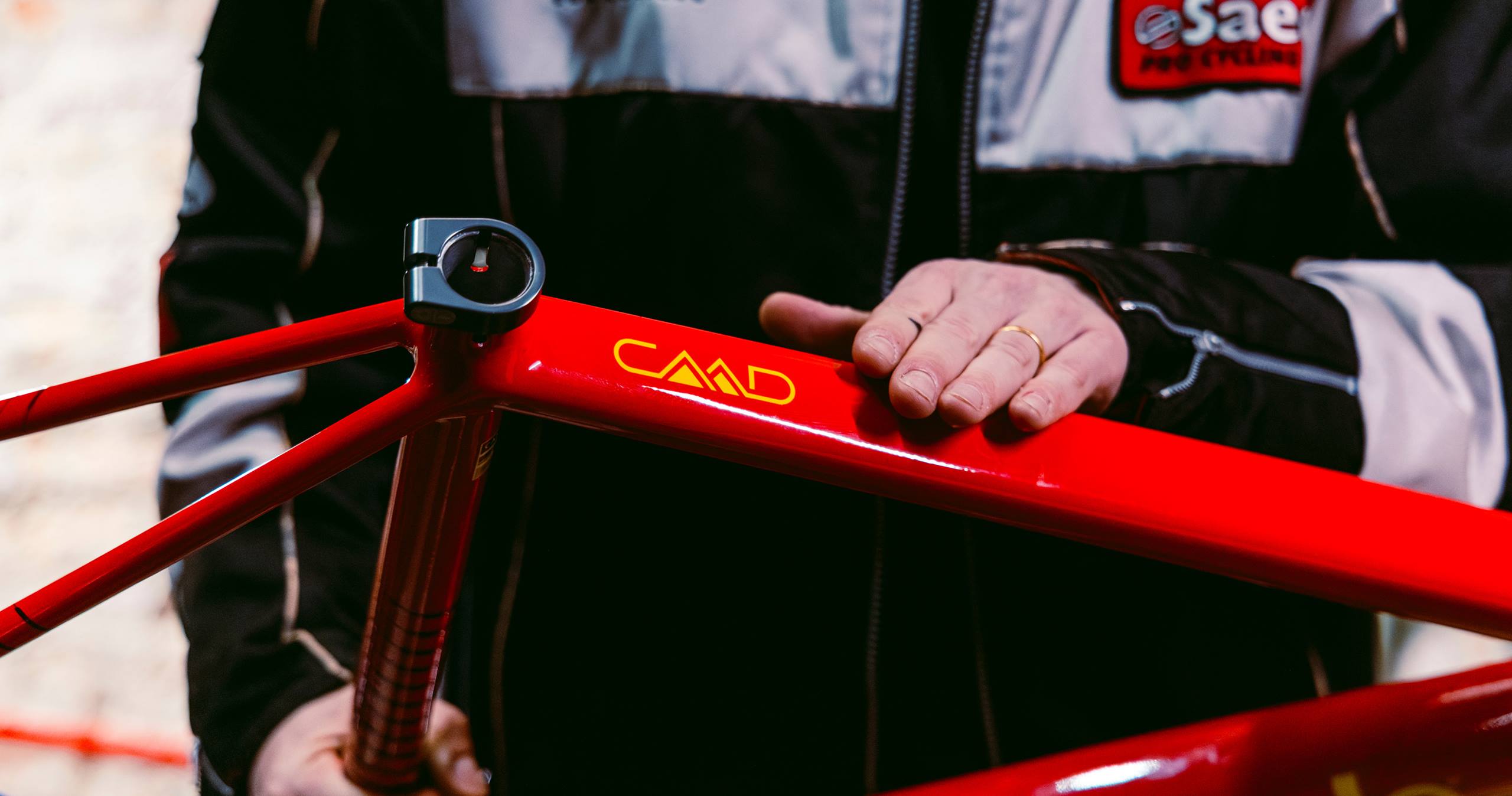
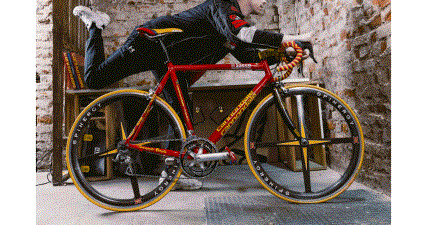
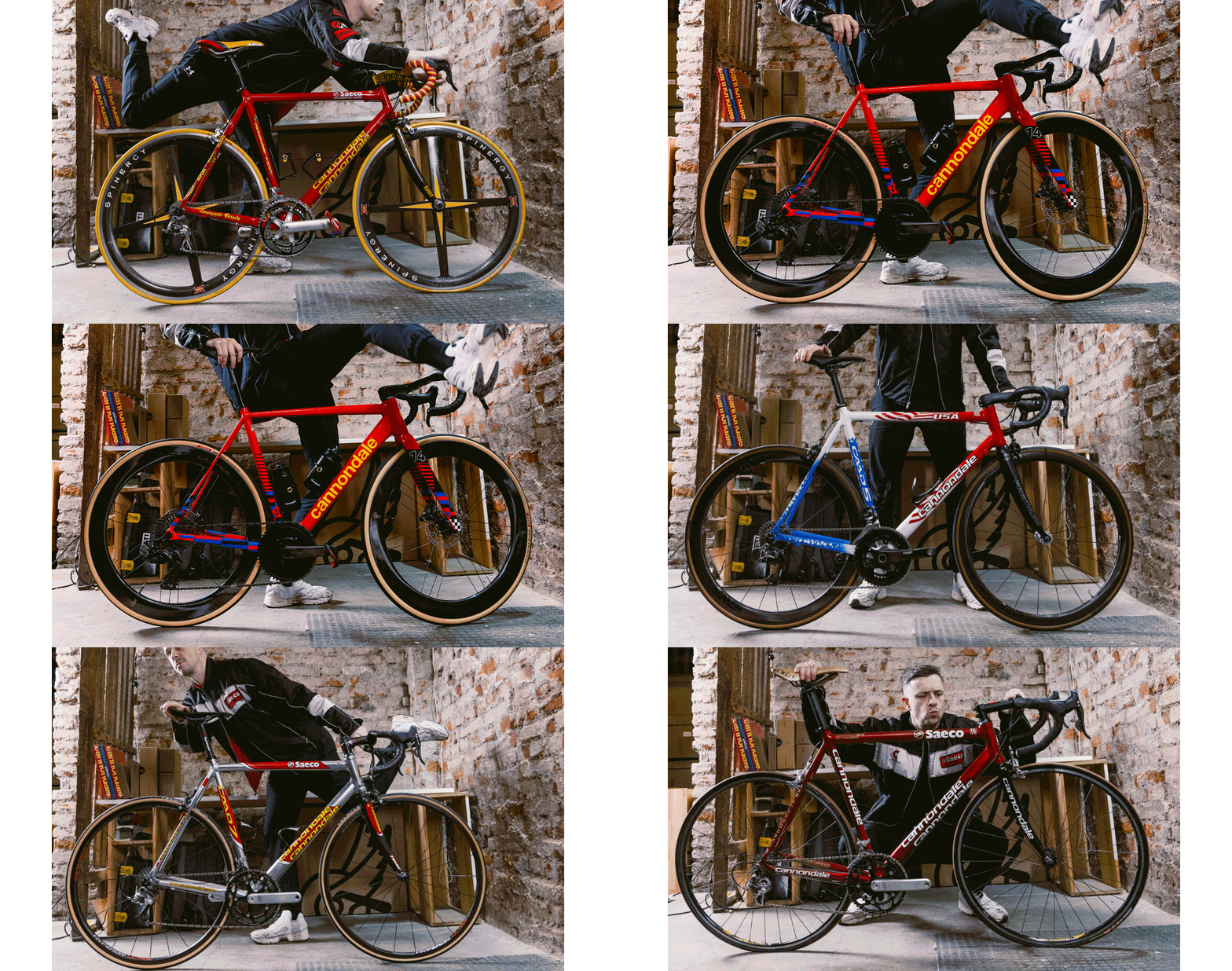
Among all his builds, one bike stands above the rest. His CAAD4.
It took seven years to complete. Seven years of searching, refining, and waiting for the right pieces to come together. When it finally did, it carried more than completion. It carried an era.
The late ’90s. Teams like Saeco. Bright colors. Bold designs. Speed with character. Speed with style.
That spirit still lives in the bike.
And it still lands now.
When Marcel rides the CAAD4, people notice. They ask questions. They remain beside it a little longer. That kind of response has become rare, even around fast modern bikes with every current advantage built in.
It’s a performance bike.
It also has a pulse.
Now and next: CAAD14
This story moves forward.
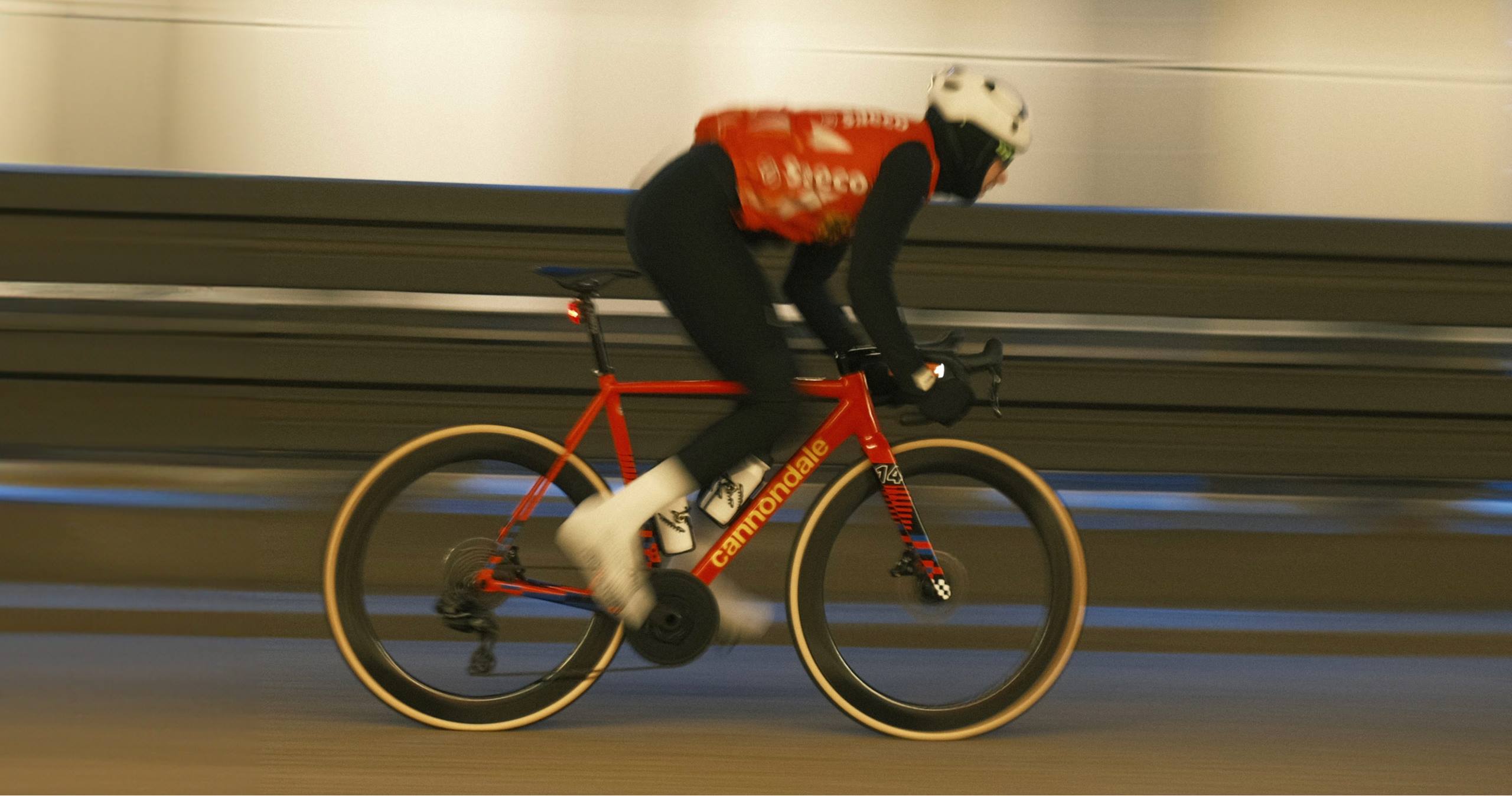
When Marcel builds a modern bike like the CAAD14, he brings the same mindset, without drifting into nostalgia.
For him, the CAAD14 is a continuation. It carries the line forward. It holds the DNA of what came before and puts it to work in the present.
The process stays the same.
Start with the frame. Read its proportions. Build to its strengths.
Deep wheels add speed and visual weight. An aero cockpit sharpens the front end. Every choice supports the balance of the bike and the way it carries itself on the road.
Subtle links to the past remain. A Campagnolo groupset. Familiar components. Details that draw a clean line across generations.
The result carries the past forward without leaning on it.
It moves with purpose.
What remains
In the end, Marcel’s perspective on CAAD is simple.
It comes down to building something that makes sense.
A frame with clarity. A clear idea. A bike that gives back exactly what you put into it.
That’s what has defined CAAD from the beginning.
And that is why it still matters.
Some things hold their line across time.
They ask to be understood.


