More than a model name, CAAD is a mindset that has guided Cannondale for over four decades. A belief that aluminum, when pushed without compromise, can deliver a ride experience defined by speed, precision, and unmistakable feel. Not as a substitute for carbon. Not as an entry-level option. But as a performance material in its own right.
CAAD has won at the highest level of the sport, shaped entire categories, and refused to follow industry trends when they pointed in the wrong direction. And while materials and manufacturing methods have evolved, the core idea behind CAAD has never changed: let aluminum do what aluminum does best.
CAAD is Cannondale

Four Decades of CAAD.
CAAD stands for Cannondale Advanced Aluminum Design, and we've been advancing the state of the art in high-performance aluminum design since our revolutionary first bike rolled off our production line way back in 1983.
To understand CAAD’s latest evolution, the CAAD14, you have to understand where it came from—and why it never went away.


Before CAAD Had a Name
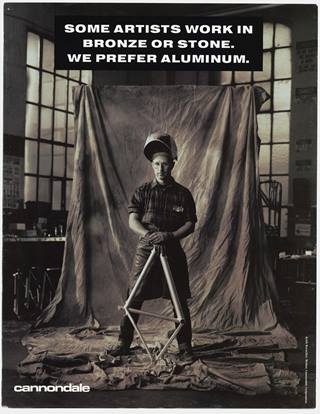
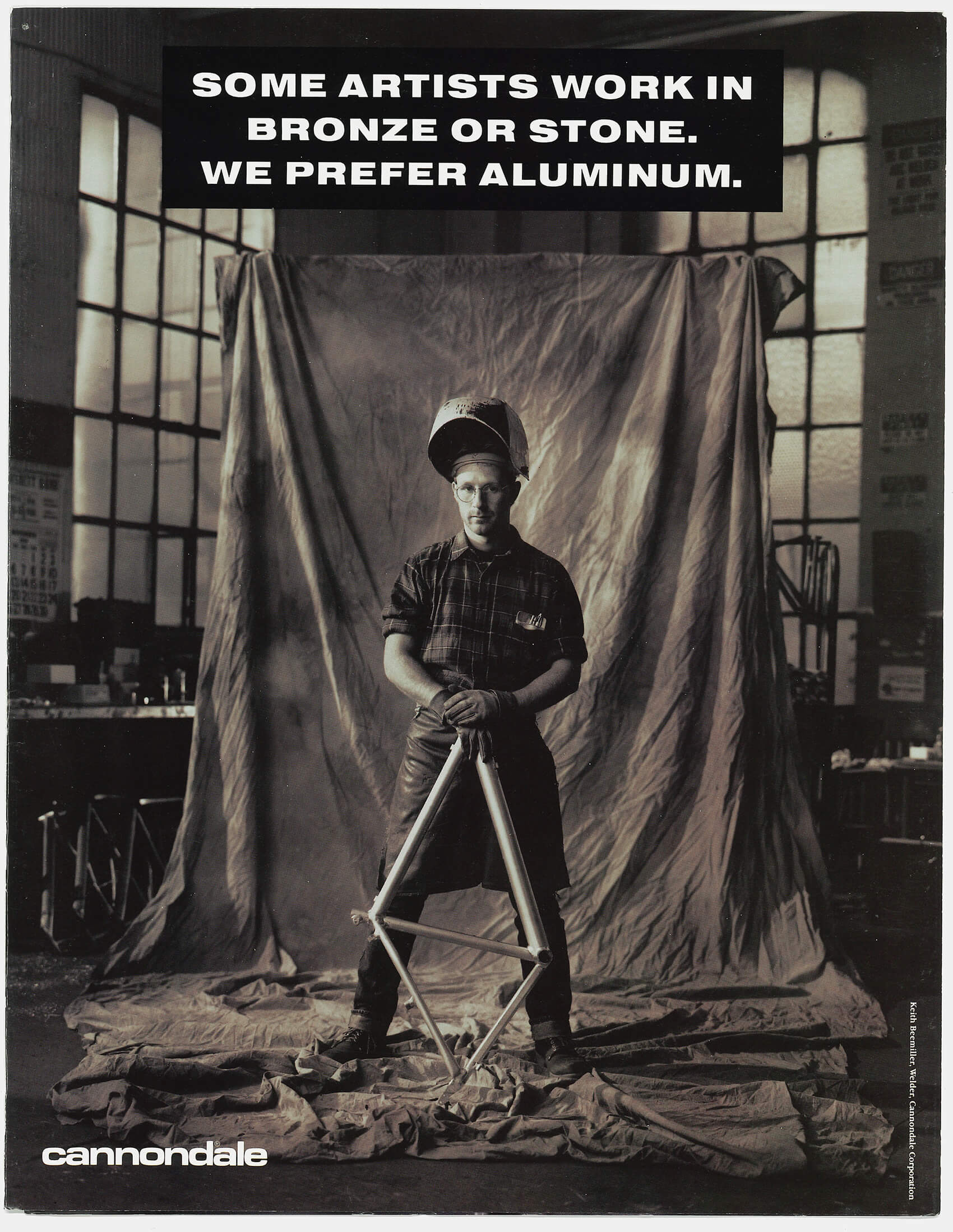
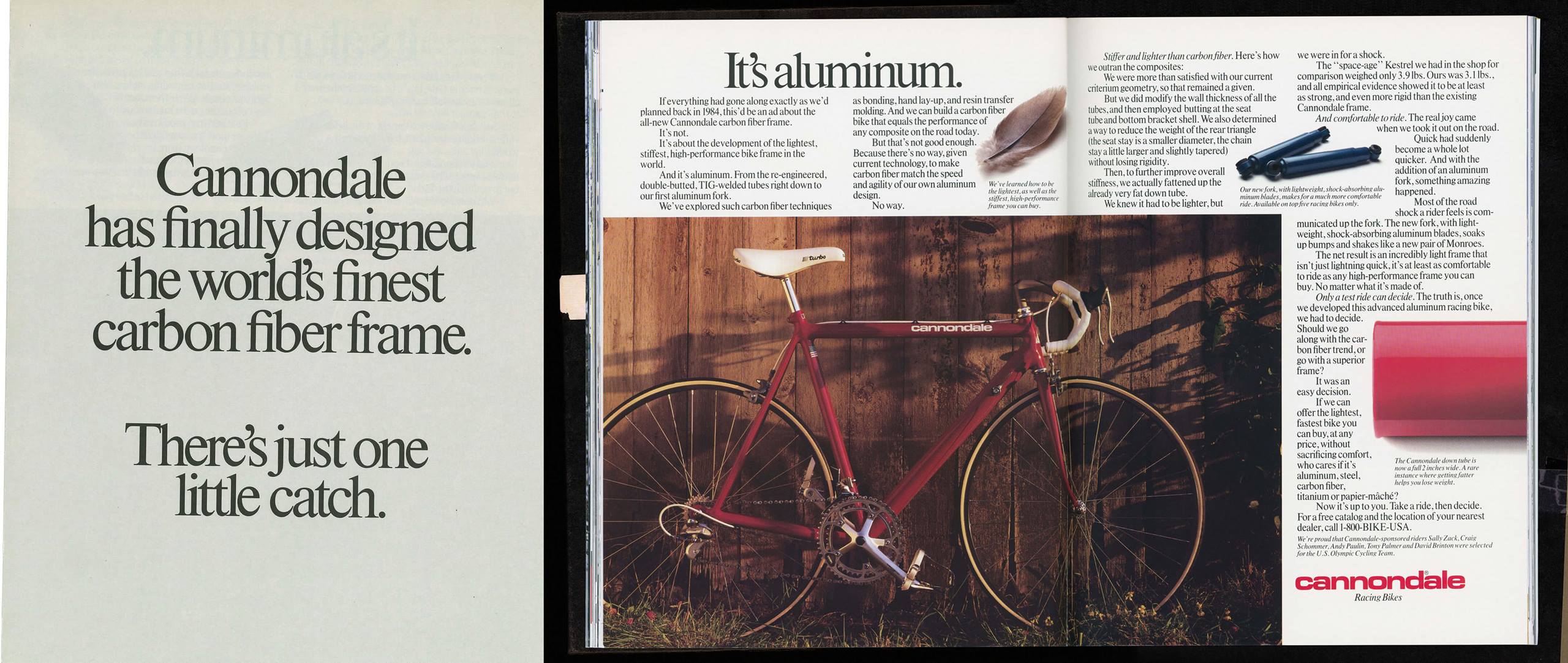
Cannondale’s aluminum story begins in 1983, long before the term CAAD existed, at a time when steel was still king in the cycling world. Steel frames, crafted from small diameter steel tubing by wizened builders in Europe, were the only game in town. It was how it had always been, and, it was assumed, as it always would be. Some builders had experimented with aluminum or titanium, but they were always deemed too flexy, too soft, and too weak to be legitimate performance machines. Acceptable, perhaps, for amateurs or enthusiasts, but certainly not for pro racers, or for the bizarre new off-road “mountain” bikes coming out of the US.
That was, of course, until an upstart outdoor company from Connecticut quietly launched their first bicycle and turned conventional wisdom on its head.
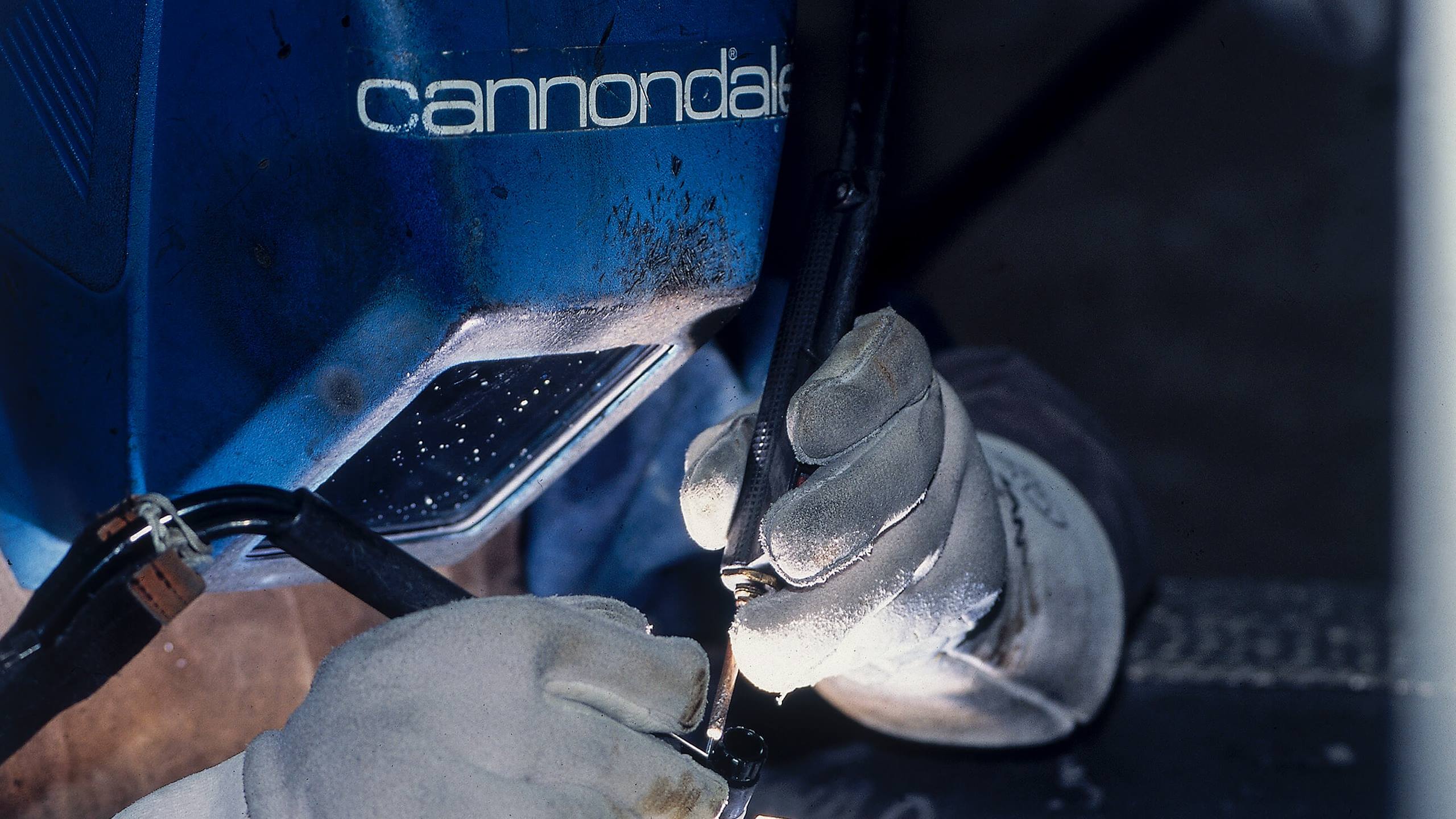
That bike was the ST500, a road touring bike, crafted from what at the time appeared to be comically oversized aluminum tubes. It looked wild and different than anything else out there. But the goal wasn’t novelty—it was performance. Our engineers had figured out that large diameter aluminum tubing would be both stiffer and lighter than steel or titanium, massively improving efficiency, handling, and speed. It was a difference you could feel from the first pedal stroke.
That simple touring bike ignited a revolution in frame construction. The era of steel was over. The era of aluminum had just begun.
Four Decades of CAAD
PLAY FILM
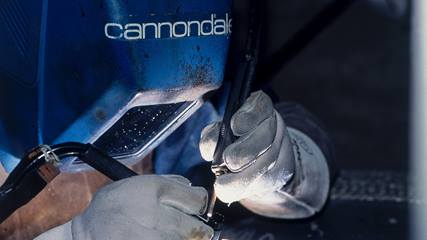
Those early frames weren’t called CAAD. In fact, they didn’t really have model names as we know them today. They were simply Touring, Road, and All-Terrain frames. But they carried many of the signature elements that would come to be associated with the CAAD frames of the future: oversized aluminum tubing, smooth welds, lifetime warranties, and fearless forward-thinking design.

Learning Fast, Building Lighter
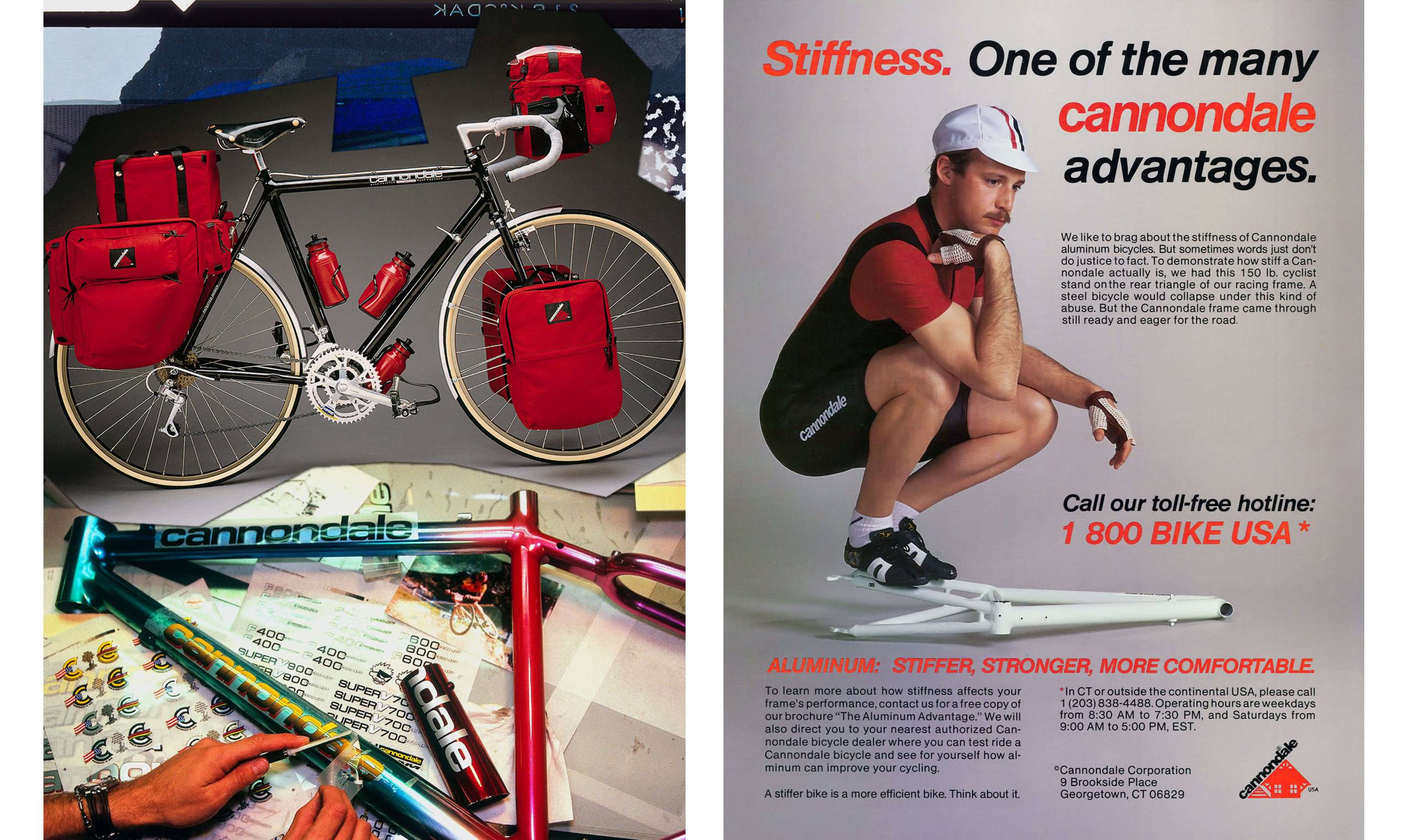
Through the 80’s, Cannondale delivered a slew of new, innovative bikes: All-Terrain MTBs, Road Racing bikes, Hybrids and Tandems, and as we iterated and improved, we realized that we needed some sort of name to differentiate the newer tech from the old. In 1989, the 3.0 Series frames arrived, named because the frames weighed roughly three pounds – insanely light for the time. These bikes introduced even larger tubing, along with cantilevered dropouts to save weight and stiffen the rear triangle.
Just a few years later, the 2.8 road frames raised the bar again. With frames tipping the scales at a feathery 2.8 pounds, these bikes represented a major leap forward in performance-focused aluminum design, featuring pyramid-shaped downtubes, and aggressively butted and shaped tubing. We were early adopters of Computer Aided Design (CAD), allowing our engineers to manipulate tubing with a level of precision that was well ahead of its time.
When CAAD Entered the Picture
The CAAD name officially appeared in 1996, but not where most people expect. Its first use was on mountain bikes, with CAAD3 frames on F-Series hardtails and CAAD2 frames on hybrids and touring bikes. From this point on, each evolution earned a higher CAAD number, replacing the earlier 2.8 and 3.0 naming.
At this stage, CAAD referred specifically to the frame, not the bike itself. Riders bought models like the F2000 or R5000, each built around a specific CAAD frame. The idea of CAAD as a standalone platform would come later.
Off-road, the results were immediate.

Dominance on Dirt
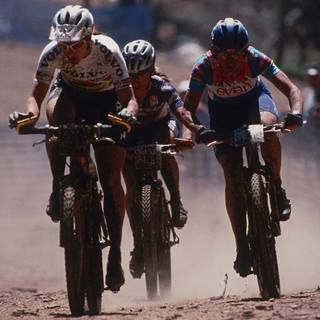
CAAD3, CAAD4, and CAAD5 mountain bike hardtails went on to dominate cross-country racing at the highest level. World Cups, National Championships, World Championships, and Olympic medals were all won on CAAD frames.
Aluminum wasn’t just competitive—it was defining the standard. By 2003, we moved away from the CAAD naming convention in mountain biking, opting for more expressive names like Optimo and Furio. The mission had been accomplished, and the technology had proven itself beyond doubt.
Aluminum wasn’t just competitive—it was defining the standard. By 2003, we moved away from the CAAD naming convention in mountain biking, opting for more expressive names like Optimo and Furio. The mission had been accomplished, and the technology had proven itself beyond doubt.
The Road Gamble That Paid Off
The defining chapter of the CAAD road story, and thus the CAAD most people are familiar with today, truly begins in 1997. Cannondale knew that to establish ourselves as a true global performance brand in road cycling, we had to race—and win—in Europe. The challenge was perception. Even though oversized aluminum was enjoying massive success in every other aspect of cycling, professional European teams still viewed it as unsuitable for pro-level racing. They thought it looked funny and could never withstand the power of the big men.
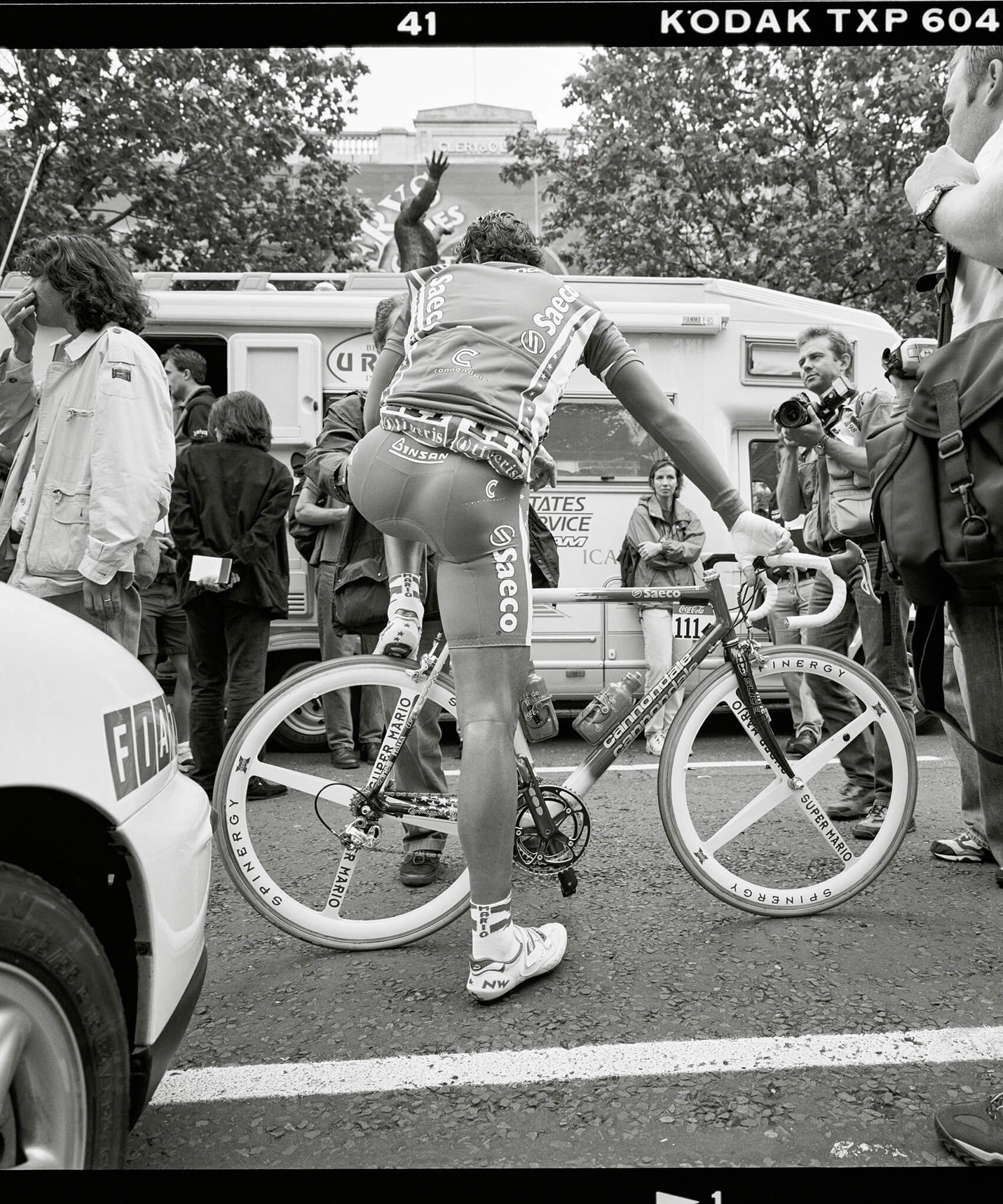
After months of quiet testing and careful negotiation, Cannondale shocked the cycling establishment by signing the Saeco road team. What followed shocked them even more. The stiffness and light weight of the CAAD3 road frame impressed the entire roster, particularly sprint star Mario Cipollini.
The rest of the peloton mocked the team’s oversized American frames. Then the races began.

When Aluminum Took Yellow
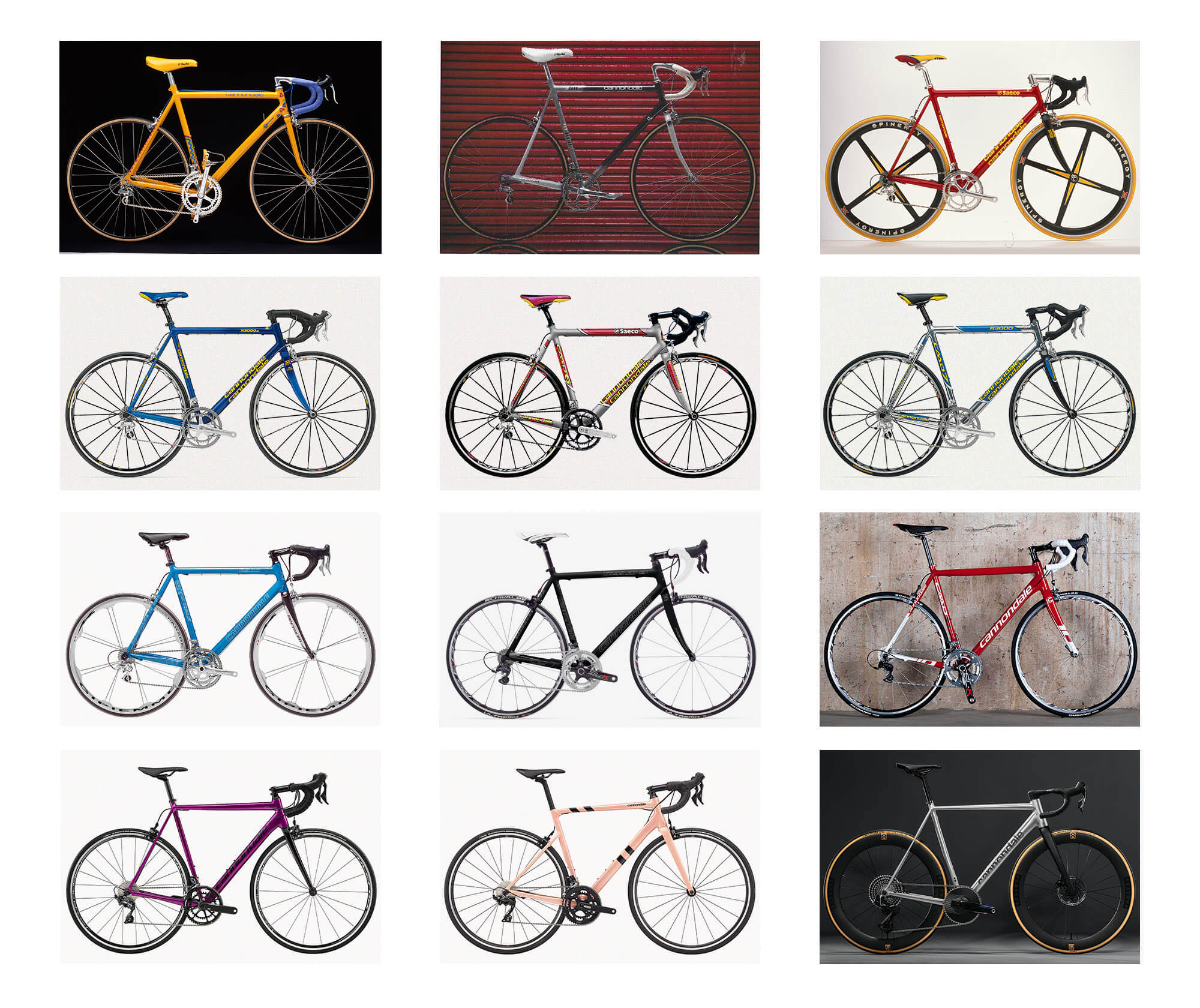
Victories followed quickly. Giro d’Italia successes, Tour de France stage wins, and high-profile classics put CAAD firmly in the spotlight. The moment that sealed its reputation came when Cipollini, standing in the yellow jersey on his yellow CAAD4, looked into the camera and said, “Cannondale… best bike, eh!”
Oversized aluminum was no longer a curiosity. It was the benchmark.
Oversized aluminum was no longer a curiosity. It was the benchmark.
Pushing the Limits of Alloy
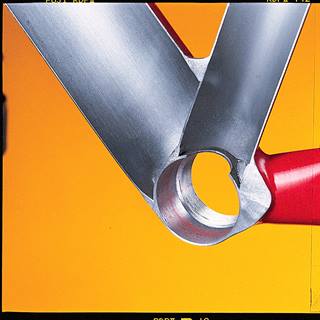
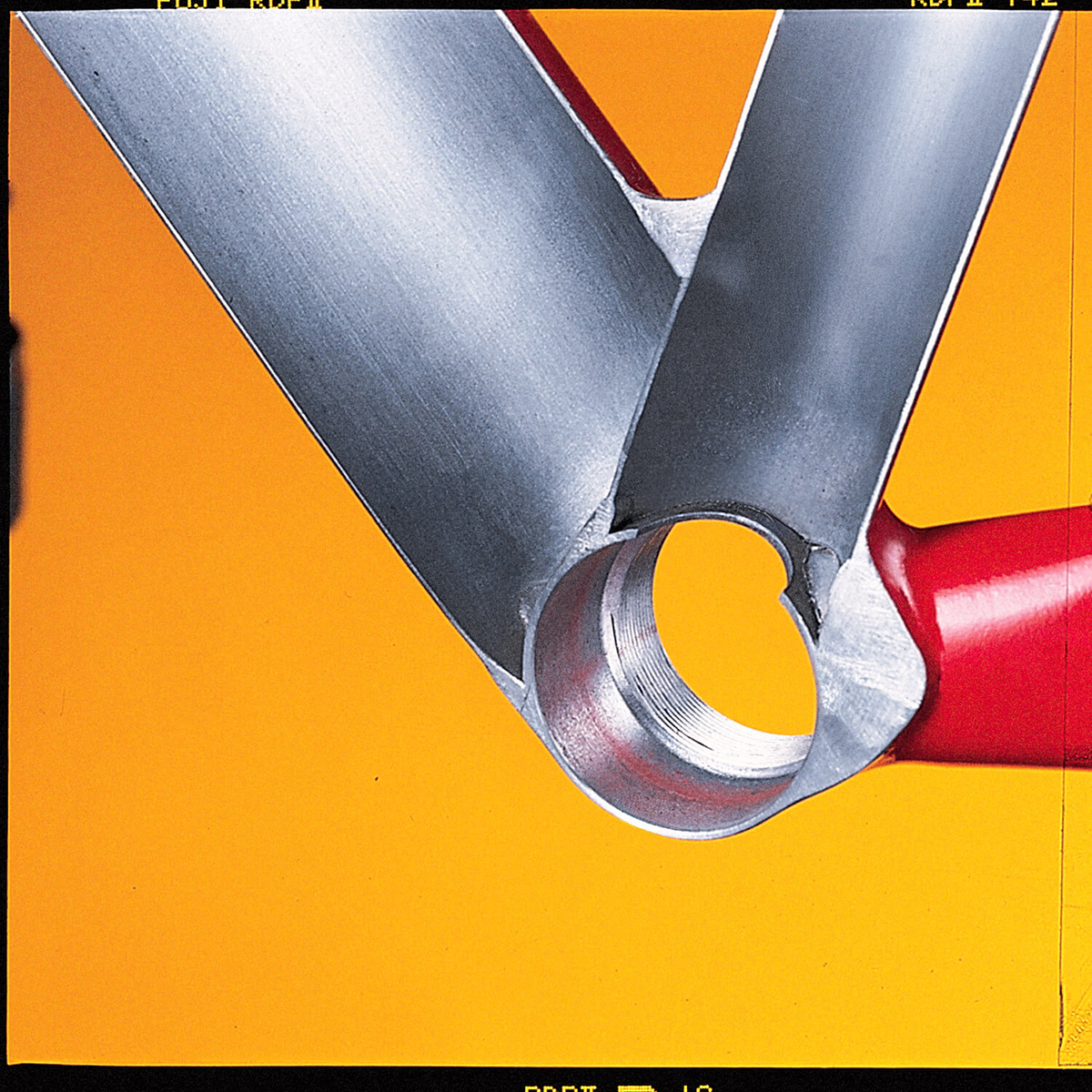
With credibility established, Cannondale kept innovating. CAAD6 introduced BB30 and HollowGram cranks, redefining stiffness-to-weight ratios and influencing bottom bracket standards across the industry. CAAD7 and CAAD8 refined the formula further, focusing on weight reduction and ride quality without sacrificing the explosive character that defined CAAD.


CAAD keeps winning
Carbon was gaining momentum, but CAAD frames remained lighter and smoother than many early carbon alternatives. In fact, the last two Grand Tours ever won on aluminum bikes were won on CAAD frames: Gilberto Simoni in 2003 on CAAD7, and Damiano Cunego in 2004 on CAAD8. Cunego loved his CAAD8 so much that even after the team transitioned to the carbon and aluminum Six13 frames, we simply repainted his aluminum frame and let him race—and win.
When the Industry Looked Elsewhere
By the mid-2000s, high-performance road cycling had shifted decisively toward carbon. Many brands stopped developing aluminum altogether, relegating it to entry-level categories engineered primarily around cost.
Cannondale embraced carbon innovation as well, introducing Six13, SystemSix, and SuperSix. But we never stopped believing in aluminum—or in CAAD. We kept innovating, refining, and re-inventing, creating aluminum frames that rivalled carbon in performance, for a fraction of the cost. Savvy racers without deep pockets or sponsorship dollars started building up CAAD frames, spending their money on high-end wheels and components to create budget-friendly race rockets that blew the doors off entry-level carbon bikes in weight, ride quality, and value. Other manufacturers didn’t seem to notice or care. But we did.
CAAD Returns as a Statement
CAAD9 marked the beginning of a resurgence of high-performance aluminum. For the first time, CAAD became a platform name, not just a frame designation. And in 2009, we followed our instincts and leaned in, offering CAAD9 builds all the way up to the Dura-Ace level. Aluminum frames with high-end components…a lot of people thought we were crazy. But a whole lot more knew we were spot-on. What seemed risky on paper proved wildly successful in reality. Performance aluminum was back in a big way.
CAAD10 raised the bar again, becoming the alloy benchmark with carbon-rivaling performance and shapes that foreshadowed the first SuperSix EVO. CAAD12 followed with disc brakes, an incredibly smooth ride, and a design that fully embraced aluminum rather than imitating carbon.


Now, if you’ve been paying attention, you might’ve noticed there was no CAAD11. CAAD11 was the frame that never was. For no reason other than to do something unexpected, we decided to skip CAAD11 and go straight to 12. Some speculated that it was due to potential confusion with Tour winner and former Cannondale MTB champ, Cadel Evans. Or that we were preemptively tired of Spinal Tap, “it-goes-to-11”, references. But no. It was just to be contrary and suggest that CAAD12 was so advanced it needed to skip a grade. No one ever accused us of being normal…
Losing Focus—and Finding It Again
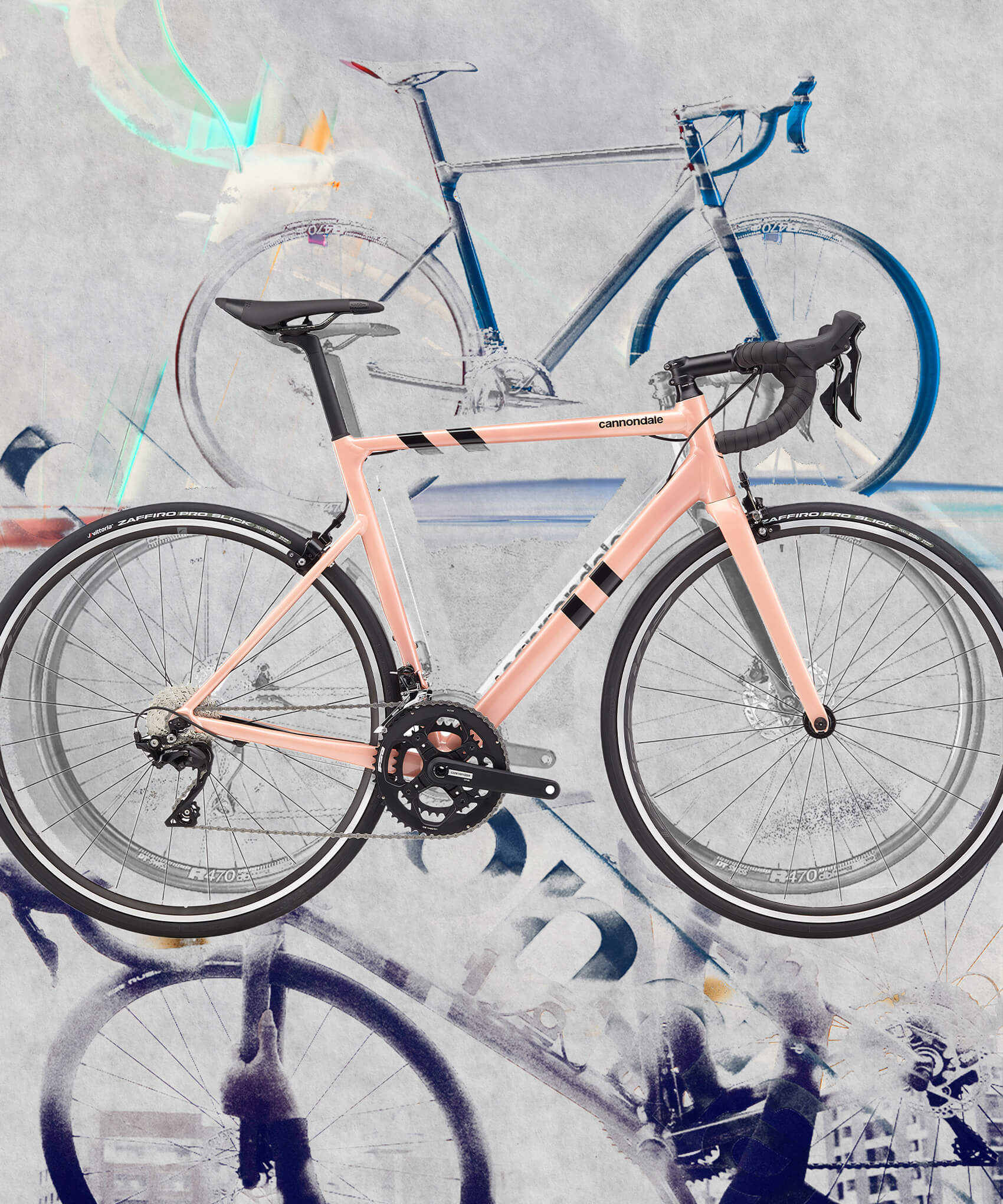
The next iteration, CAAD13, was a strong performer in every way. It was light, and smooth, and aero, but it drifted from the core CAAD philosophy. It mimicked the shapes of the SuperSix EVO, and in so doing, aluminum was forced into forms that weren’t natural to it. Signature smooth welds disappeared, and some of the magic feel of CAAD was lost. CAAD began to feel more like a price-point alternative than a statement.
The lesson was clear—and it set the stage for what came next.
The lesson was clear—and it set the stage for what came next.
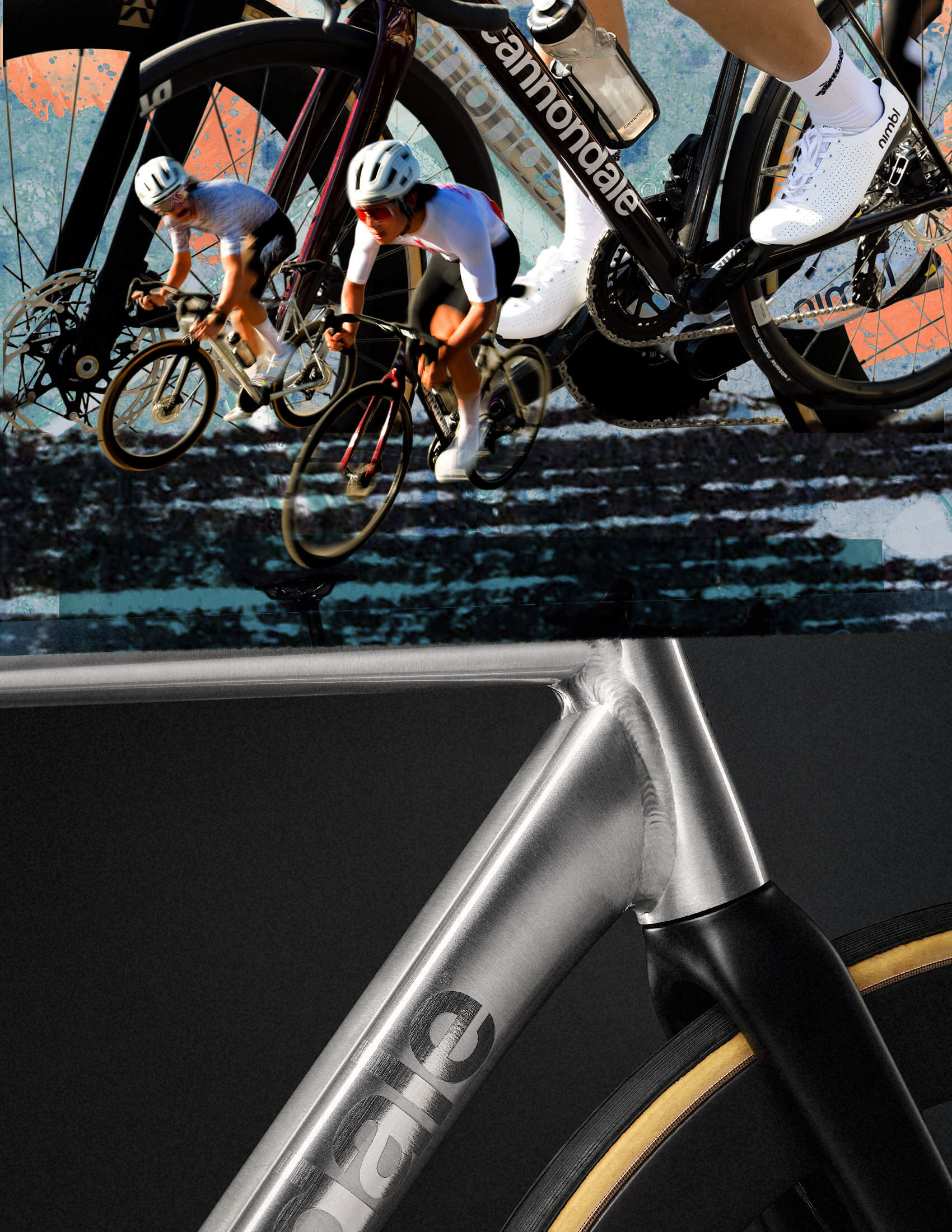
CAAD14: Let Aluminum Be Aluminum
CAAD14 is a reset. A return to first principles.
Big tubes, smooth welds, and a classic aluminum silhouette come together with thoroughly modern performance. The ride is explosive, precise, and alive—unmistakably CAAD.
CAAD14 isn’t a substitute for carbon. It’s not an apology. It’s a declaration that aluminum, when done right, still delivers something nothing else can.
It’s not for everyone.
But for those who know, nothing else will do.
Big tubes, smooth welds, and a classic aluminum silhouette come together with thoroughly modern performance. The ride is explosive, precise, and alive—unmistakably CAAD.
CAAD14 isn’t a substitute for carbon. It’s not an apology. It’s a declaration that aluminum, when done right, still delivers something nothing else can.
It’s not for everyone.
But for those who know, nothing else will do.
CAAD: Four Letters That Changed Cycling Forever
Compare Products
Add another product to compare


